The Anelle kindergarten in Latvia managed a major reduction in its food waste within one year in the We Eat Responsibly project. They moved from an average of 58 kg of waste per child a year at the beginning of the school year to an average of 18 kg, representing a nearly 70% decrease! How did they achieve this success? Read their story of change!
At the beginning of the school year a large amount of food waste was identified by the local eco-team as a crucial problem to be solved. To motivate children to reduce their food waste, the students were involved in all parts of the process – monitoring the food waste, evaluating the menu, creating the action plan, and in celebrating after food waste was reduced.
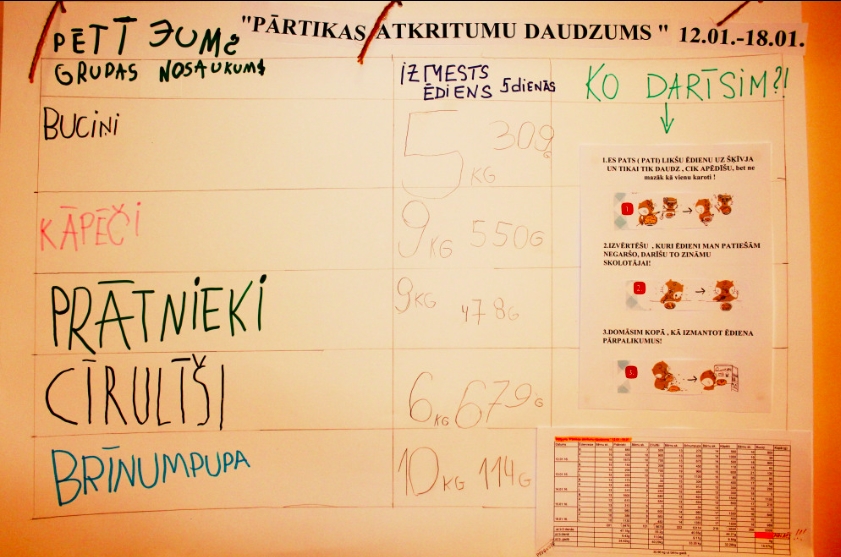
Children took part in food waste monitoring.
A survey was used to determine the food preferences of the children. Children four years and older were allowed to serve their meal themselves. They could eat leftovers later in the afternoon. Wasted food was picked up by a person who uses it as compost. The project mascot “Mr. Hamster” helped by presenting information in an entertaining way and by motivating children. As early as in January the amount of food waste was reduced to 27 kg (15-40 kg based on age group).
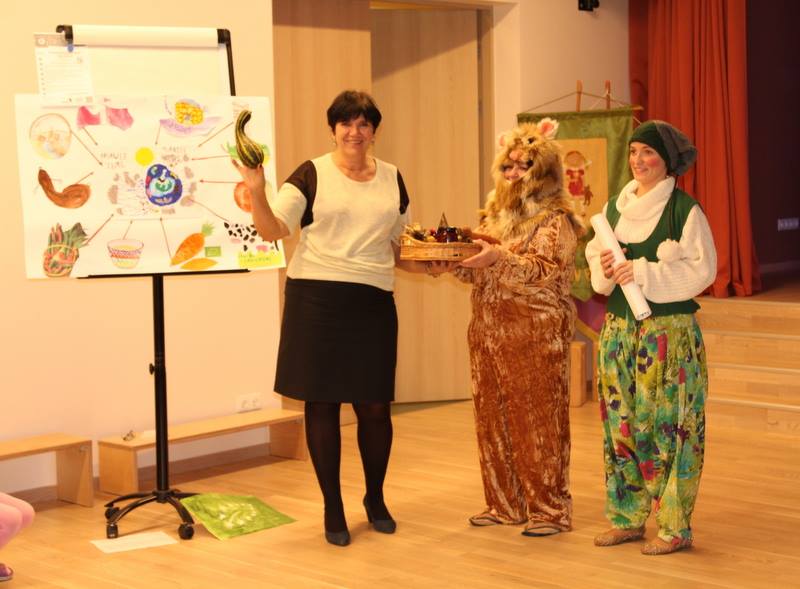
Playful form of education about responsible food consumption.
The success of the Annele kindergarten is based on two important practices – raising children’s motivation and supportive environment on one hand, and the use of PDCA (plan-do-check-adjust) in organizing and improving their work on the other.
Thanks to the PDCA method, they learned that the success in January was made possible by adjustments to the menu based on children’s preferences. Moreover, soup was identified as the most wasted type of food, mostly because children drank sweetened drinks that diminish their appetite. A decision was made not to serve sweet drinks on days when soup was on the menu.
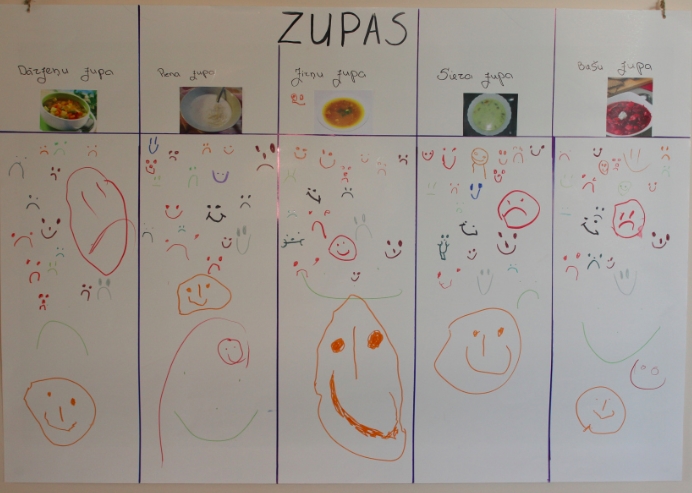
Soup evaluation.
The kindergarten also focused on other issues connected to food waste such as accessibility of local and seasonal food and the prevalence of industrially produced snacks containing palm oil.
In addition to activities from the first term, they also included lessons and workshops on responsible food consumption for children and their parents. Children also visited the recycling center and landfill. In the second term, the menu was adjusted to be healthy and responsible and to meet children’s preferences at the same time. The amount of meat and processed snacks on the menu was reduced.
Children took part in growing their own food in the school garden. Local farmers were offered a chance to supply the fruit and vegetables to the kindergarten canteen. By the end of the schoolyear in May, the average amount of wasted food was 18 kg per child a year (8-29 kg depending on the age group), meaning a three-fold decrease in the wasted food.
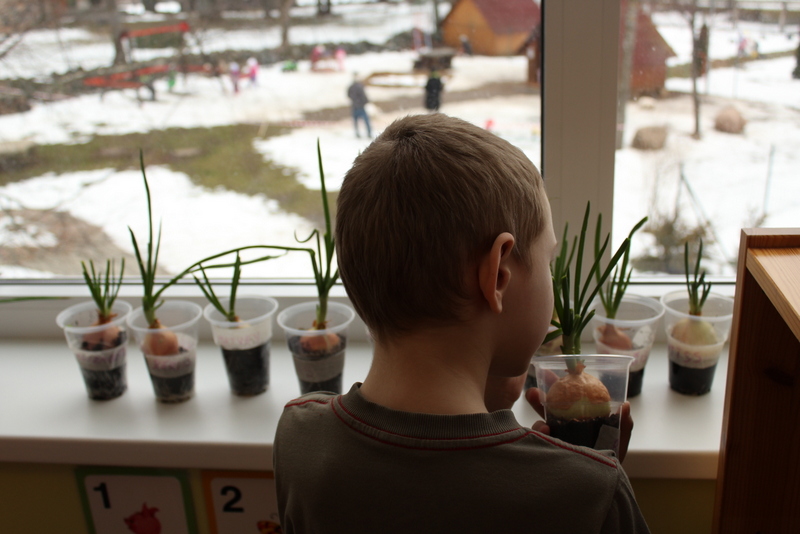
Children were helping with growing food.
It can be said that the key elements for success in changing attitudes is maximum involvement, analysis, celebrating the victories, and a combination of motivating activities with an environment that allows for change.